

FREE QUOTE CALL OR TEXT
0400 176 537
Licensed, Insured Remedial Building Specialists You Can Trust!*
GET YOUR JOB BOOKED IN TODAY !!
Concrete Cancer Repairs Sydney
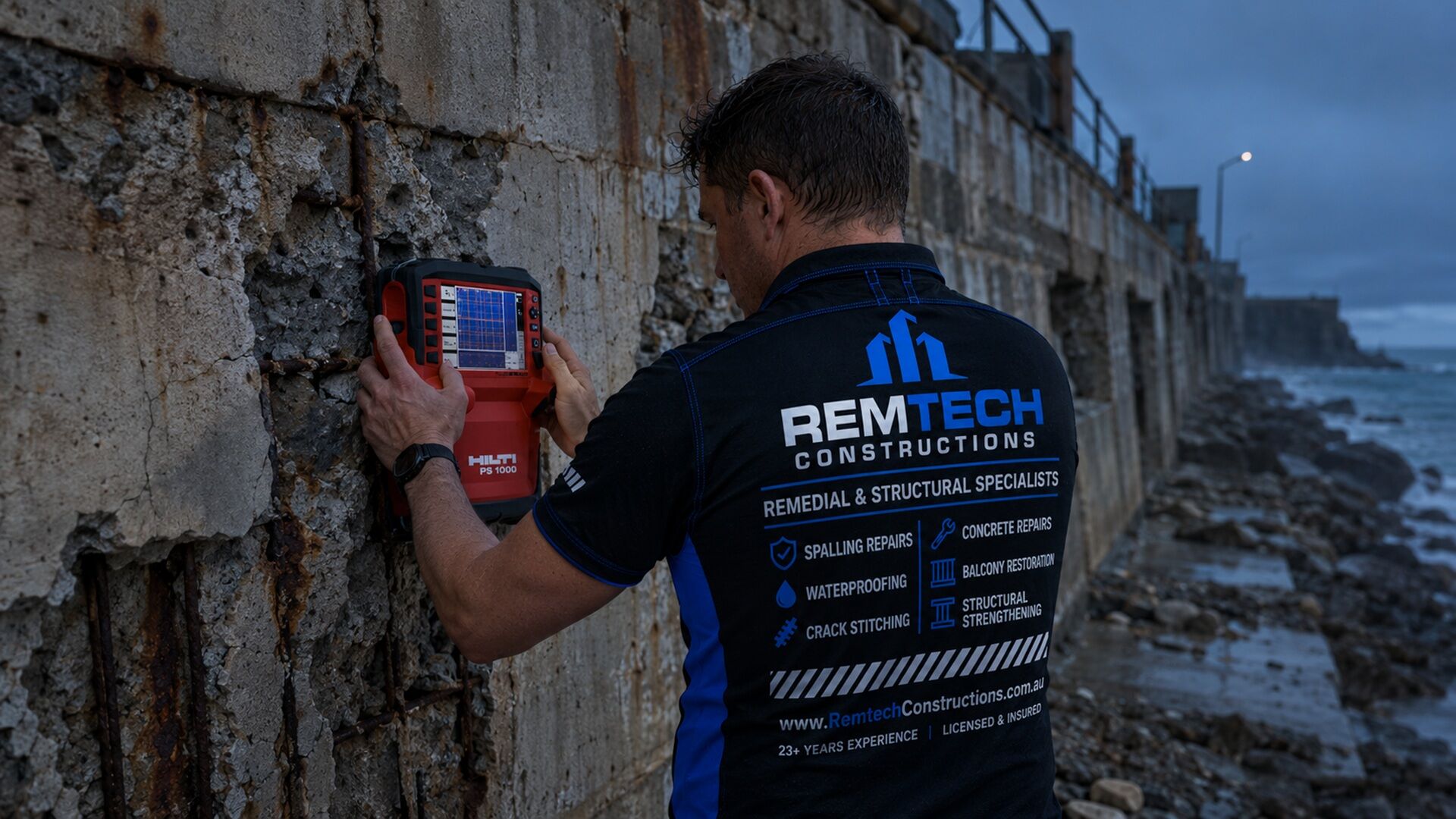
Remtech Constructions provides coordinated concrete cancer repair services for strata, commercial and residential properties throughout Sydney.
Concrete cancer can affect balconies, suspended slabs, car parks, columns, beams, concrete soffits, staircases, podiums, external walkways, concrete lintels and other reinforced concrete elements.
The visible cracking, rust staining or spalling may show only part of the deterioration. The repair scope must also consider the surrounding concrete, reinforcement condition, access, water ingress, existing finishes and the structural role of the affected element.
Remtech Constructions can review the available information, arrange an appropriate inspection pathway and prepare a site-specific repair quotation based on the property and project requirements.
Contact Remtech Constructions to arrange a Concrete Cancer Inspection or request a detailed repair quotation.
REQUEST QUOTE CALL OR TEXT 0400 176 537
Trusted by Builders, Strata Managers & Property Owners
GET YOUR JOB BOOKED IN TODAY !!

PROFESSIONAL CONCRETE CANCER REPAIRS
• Highest Quality Materials
• Professional Site Inspection
• Long Warranties On All Repairs
Expert Concrete Cancer Repair Service In Sydney
Expert Concrete Cancer Repair Service In Sydney
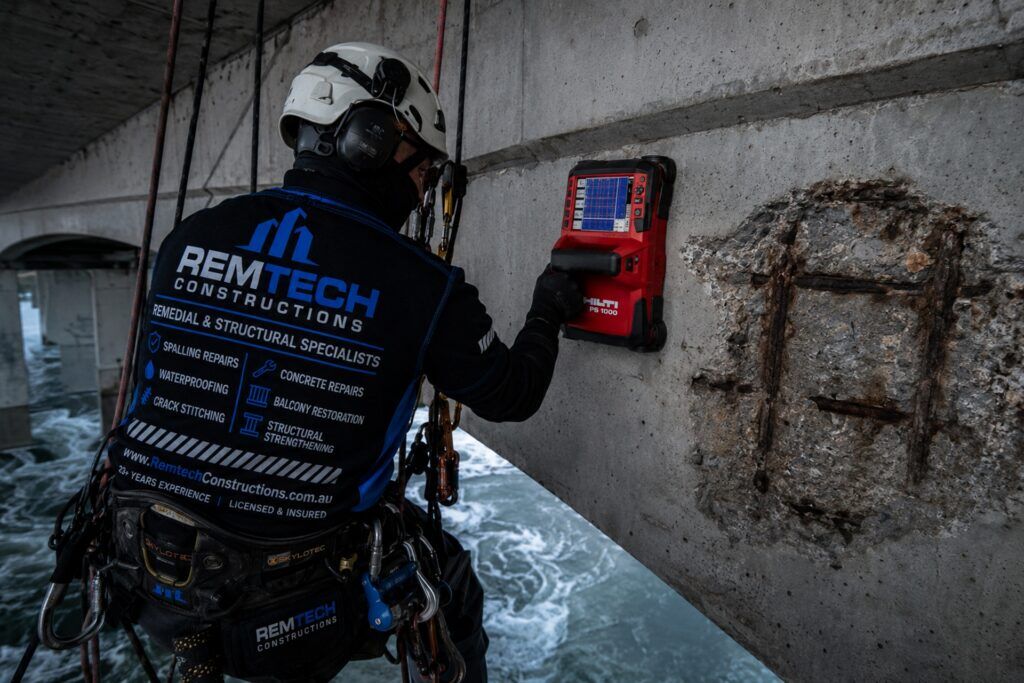
Concrete Cancer Repair Services For Sydney Properties
Concrete cancer should not be treated as a cosmetic patching problem.
Placing new mortar over loose, delaminated or corrosion-affected concrete may conceal the visible damage without addressing the deterioration beneath or around the repair.
A suitable concrete cancer repair scope should consider:
– The visible and likely concealed deterioration
– The condition of the surrounding concrete
– The condition of the embedded reinforcement
– The role of the affected concrete element
– Water ingress and exposure conditions
– Existing coatings, render, tiles or waterproofing
– Previous concrete repairs
– Site access and working height
– Public, resident and occupant protection
– Existing reports, drawings or specifications
– Required waterproofing and surface reinstatement
– Hidden or additional deterioration discovered during the work
The final repair method should be based on the actual property, affected elements and project requirements rather than a standard surface patch.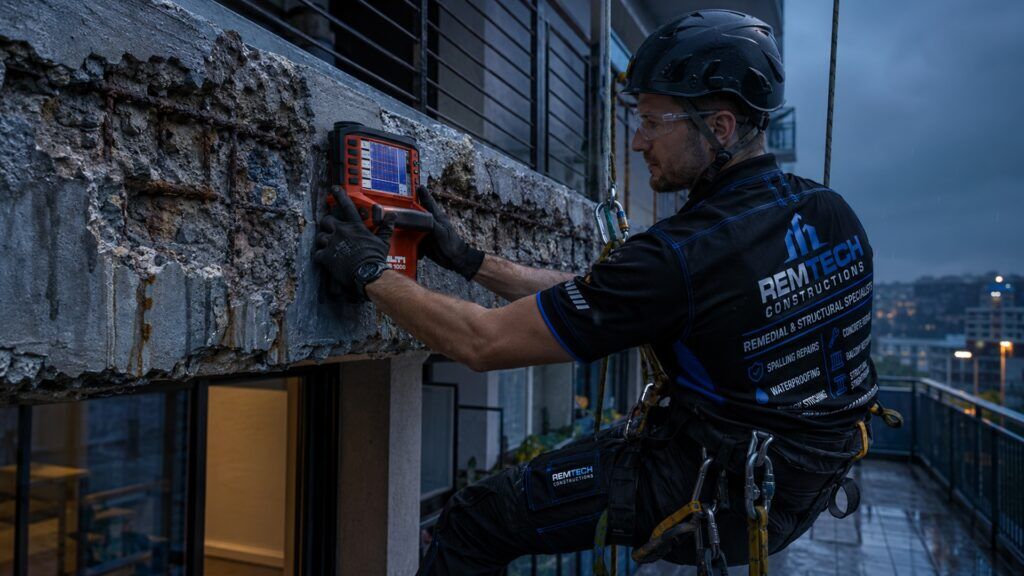
Concrete Elements And Building Areas We Repair
Balcony Slab Edges And Soffits
Balcony fronts, slab edges and soffits can deteriorate around reinforcement, balustrade penetrations, joints, coatings and waterproofing interfaces. The repair scope may need to consider the concrete damage together with surrounding membranes, coatings, render, tiles or balustrade details.
Basement And Multi-Storey Car Parks
Concrete cancer in basement and multi-storey car parks can affect slab soffits, beams, columns, ramps, joints and areas exposed to persistent moisture. Repair delivery may need to be staged around vehicles, pedestrians, residents and continued building access.
Structural Columns And Beams
Deterioration affecting columns and beams requires careful consideration of the concrete, reinforcement and structural role of the affected element. Engineering or consultant input may be required where there is significant deterioration, reinforcement loss or a documented repair design.
Suspended Slabs And Concrete Soffits
Loose, hollow or delaminated overhead concrete can require controlled access, protection beneath the work area and careful removal of unsound material. The repair scope should identify how the area below will be isolated and how concrete debris will be contained.
Staircases, Landings And Walkways
Concrete staircases, common-property landings and external walkways can be affected by moisture, drainage problems, failed coatings and deterioration around joints. Associated waterproofing, coating or finishing work must be identified where required.
Podium Decks And External Concrete Areas
Podium slabs and exposed concrete areas may experience deterioration associated with failed membranes, poor drainage, cracking, defective joints or long-term moisture exposure. The source of the moisture should be considered before the complete repair scope is finalised.
Concrete Lintels And Façade Elements
Concrete lintels, façade bands, slab fronts and other exposed elements can develop cracking, rust staining and spalling. These repairs may require elevated access, protection of the area below and reinstatement compatible with the surrounding façade finish.
Strata, Commercial And Residential Buildings
Concrete cancer enquiries can be reviewed for apartment buildings, strata common property, residential buildings, commercial properties, mixed-use developments and other reinforced concrete structures throughout Sydney.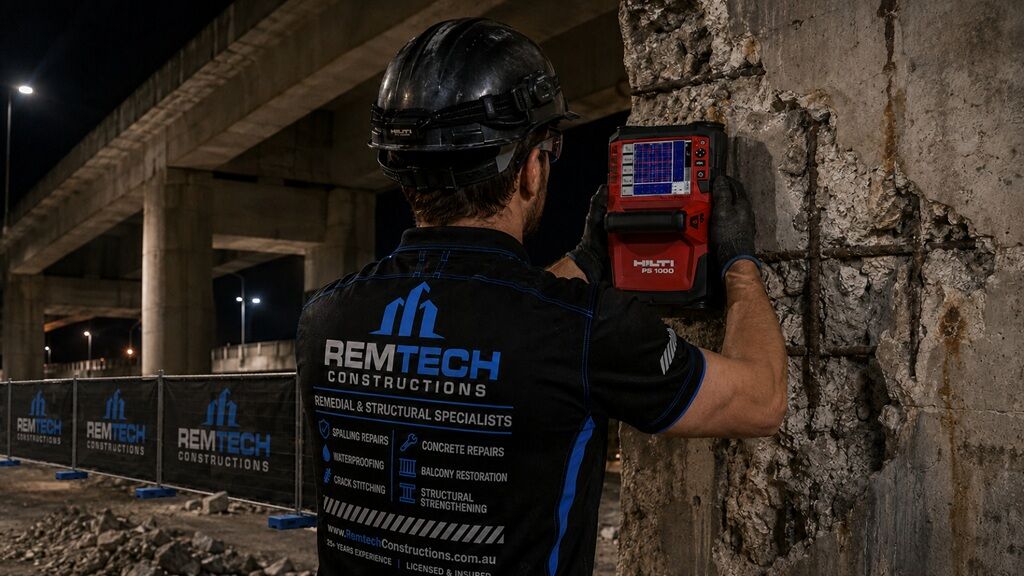
Concrete Cancer Inspections And Repair Scopes
A site inspection may be required where the extent of the deterioration, reinforcement condition, moisture source or access requirements cannot be adequately confirmed from photographs and supplied documentation.
Existing engineering reports, repair specifications, photographs and information about previous repairs can assist with preparing an appropriate repair scope.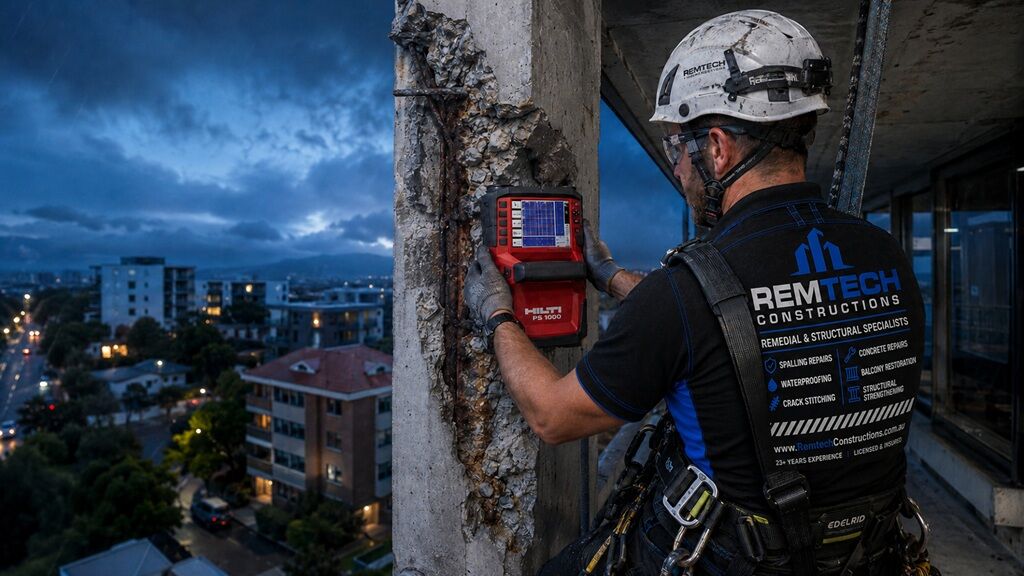
Our Concrete Cancer Repair Process
The exact repair process depends on the affected structure, deterioration and approved project scope.
A concrete cancer repair may include the following stages.
1. Review The Property And Available Information
Photographs, reports, access requirements, previous repair information and known water-ingress conditions are reviewed.
An on-site inspection may be arranged where the repair requirements cannot be adequately confirmed from the supplied information.
2. Establish Access And Site Protection
The work area is prepared using protection appropriate to the location and building use.
This may include:
– Exclusion zones
– Debris containment
– Floor and wall protection
– Overhead protection
– Dust-control measures
– Temporary access equipment
– Pedestrian or vehicle management
– Coordination with residents, tenants or building management
3. Define The Repair Area
The visible and suspected repair perimeter is identified before concrete removal begins. The final repair area may become larger where additional hollow, delaminated or unsound concrete is discovered.
4. Remove Unsound Concrete
Loose, damaged and delaminated concrete is removed to expose the affected area. Concrete removal should continue until a suitable repair perimeter and remaining substrate have been established.
5. Expose And Prepare The Reinforcement
Affected reinforcement is exposed sufficiently to allow appropriate preparation. Corrosion products are removed and the condition of the remaining reinforcement is reviewed.
6. Address Reinforcement Deterioration
Reinforcement treatment, replacement or supplementation may be required depending on the remaining steel condition and approved repair requirements. Engineering or consultant direction may be necessary where there is significant reinforcement deterioration.
7. Prepare The Concrete Substrate
The remaining concrete is cleaned and prepared for the selected repair system. Primers, bonding systems or pre-wetting requirements are completed in accordance with the approved repair method and relevant material requirements.
8. Reinstate The Concrete
The repair area is reinstated using a repair mortar or concrete system suited to the repair location, depth, orientation and exposure conditions. Overhead, vertical and horizontal repairs may require different materials or application methods.
9. Cure And Finish The Repair
The completed repair is cured and protected in accordance with the relevant material requirements. The repaired area is finished to the profile and surface condition included in the quotation.
10. Complete Associated Remedial Work
Protective coatings, waterproofing, joints, sealants, render, tiles or other finishes are completed only where they have been specifically included in the approved scope. Concrete repair does not automatically include rectification of every associated moisture or finishing defect.
11. Review And Handover
The completed work is reviewed against the agreed repair scope. Photographs, repair records, product information or other handover documentation can be provided where they form part of the project requirements.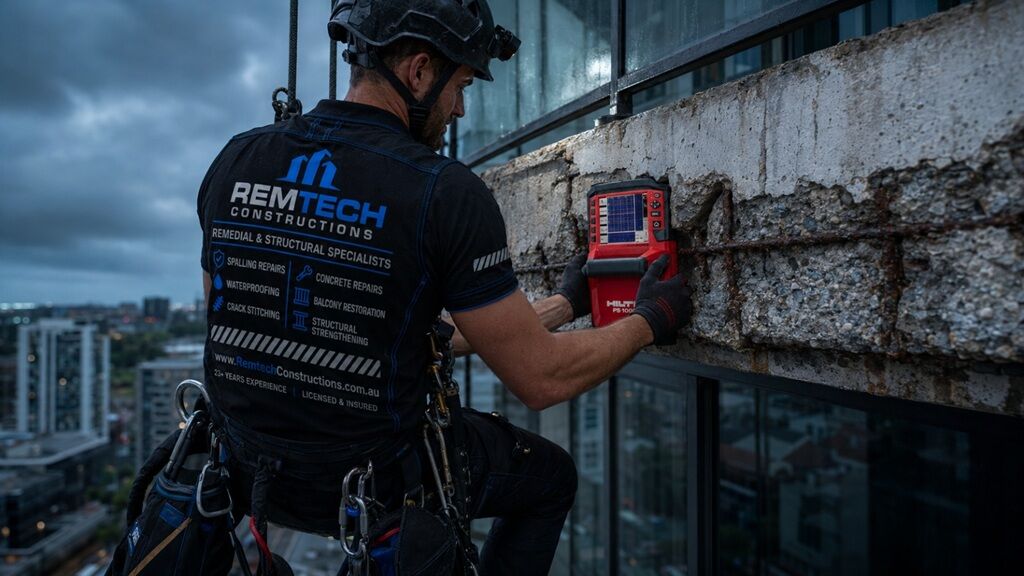
Strata Concrete Cancer Repairs
Concrete cancer is a common remedial issue in Sydney strata buildings, particularly around balconies, slab edges, basement car parks, soffits, beams, columns, staircases and external common-property areas.
A strata concrete repair project may involve:
– Strata managers
– Owners corporations
– Strata committees
– Building managers
– Property managers
– Engineers
– Remedial consultants
– Builders
– Individual owners where appropriate
One quotation may include access, protection, reinforcement preparation, coatings and latent-condition allowances, while another may include only the visible concrete repair.
Those quotations are not directly comparable unless their inclusions and exclusions are understood.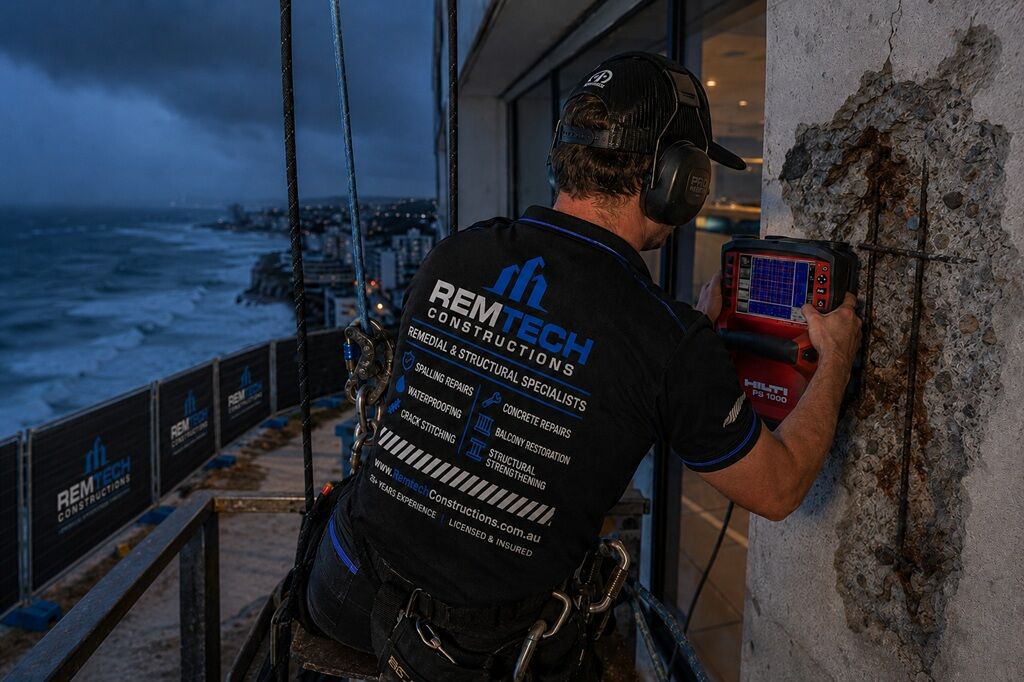
Commercial And Occupied-Building Repairs
Concrete cancer repairs in occupied commercial and mixed-use properties require planning around the continued operation of the building.
Depending on the project, the repair scope may need to address:
– Work-area isolation
– Pedestrian and vehicle access
– Tenant and occupant communication
– Overhead protection
– Dust and debris containment
– Noise restrictions
– Material storage and deliveries
– Restricted working periods
– Scaffold, platform or rope-access requirements
– Temporary closures
– Staged repair areas
– Existing services and finishes
– Coordination with building management
– Required inspections and handover information
These requirements should be identified before the project programme and final quotation are confirmed.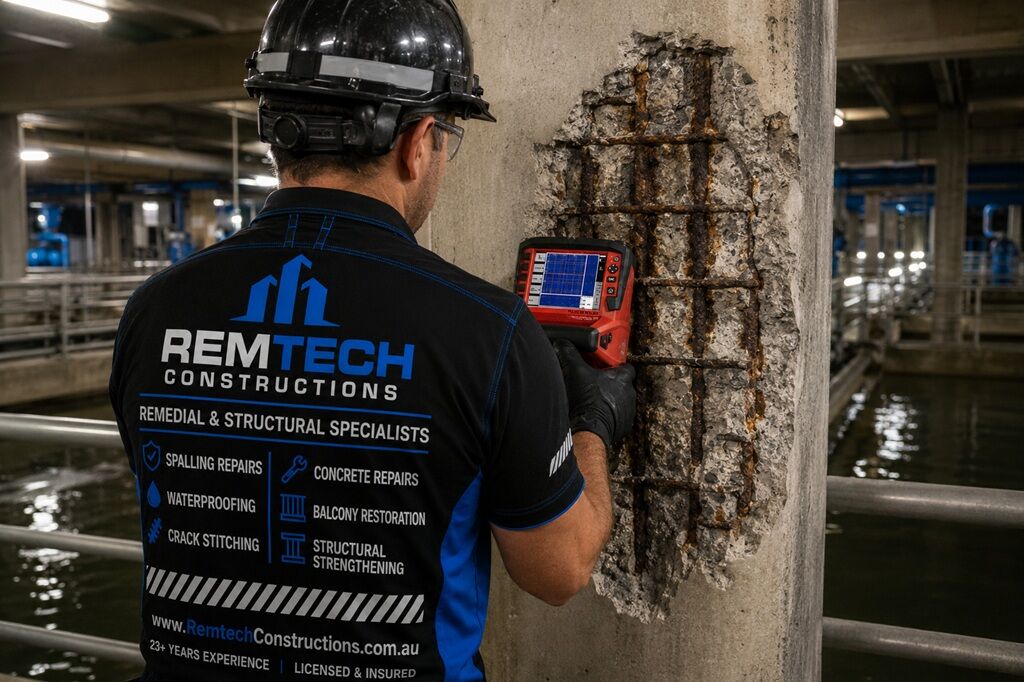
Water Ingress, Waterproofing And Associated Defects
Concrete cancer repair does not automatically rectify the condition that allowed moisture to reach the reinforcement.
Associated defects can include:
– Failed waterproofing membranes
– Cracked or defective joints
– Leaking penetrations
– Failed balustrade interfaces
– Defective sealants
– Poor drainage
– Ponding water
– Failed protective coatings
– Moisture trapped beneath tiles or finishes
– Earlier incomplete or incompatible repairs
Where water ingress or failed waterproofing has contributed to the deterioration, the associated rectification work should be considered when the repair scope is prepared.
The quotation must clearly state whether waterproofing, drainage, joints, sealants, coatings, render, tiles or other reinstatement work is included.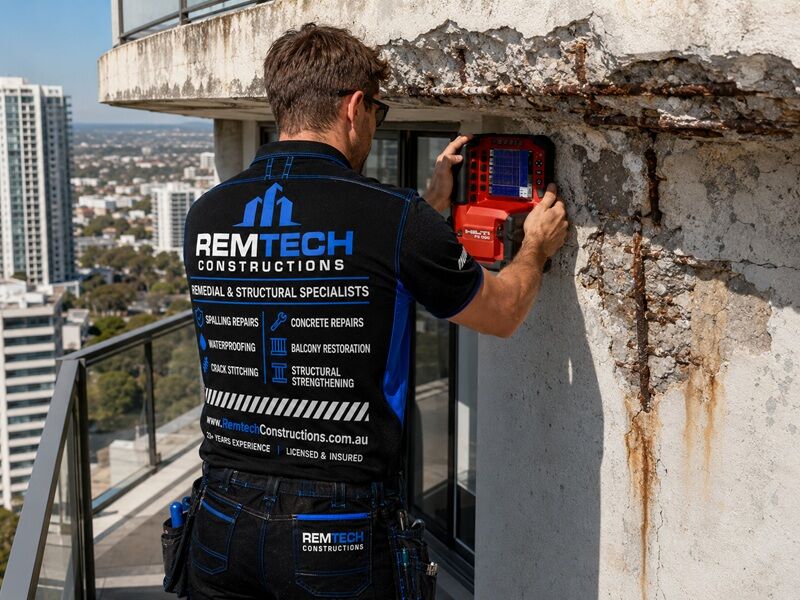
Previous Concrete Cancer Repair Projects
View two completed concrete cancer repair projects involving a Sydney basement car park and a strata apartment building. These projects demonstrate the different repair requirements associated with overhead slab soffits and beams compared with externally exposed balcony slab edges.
Basement Car Park Soffit And Beam Concrete Cancer Repairs
Location: Sydney, NSW
Property Type: Basement Car Park
Repair Areas: Suspended Slab Soffits And Concrete Beams
Service: Concrete Cancer And Spalling Repairs
Completion Date: 18 July 2026
The Problem
Sections of the basement car park soffit and supporting concrete beams displayed cracking, rust staining, hollow concrete and localised spalling along the reinforcement lines. Because the deterioration affected overhead concrete above parking bays and access areas, the repair work required controlled exclusion zones, debris containment and staged access around the affected sections.
The Repair Scope
The visible and suspected repair areas were defined before loose, delaminated and corrosion-affected concrete was carefully removed to establish a sound repair perimeter. The embedded reinforcement was exposed, corrosion deposits were removed and the remaining steel condition was assessed before reinforcement treatment and any specified steel supplementation were completed. The prepared soffit and beam sections were then rebuilt using a compatible overhead repair mortar, correctly cured and finished ready for the specified protective coating.
The Result
The deteriorated sections were fully reinstated, the affected reinforcement was protected and the original soffit and beam profiles were restored with a clean, consistent finish. Completing the concrete cancer repairs in stages allowed the surrounding car park and access areas to remain safely managed throughout the project.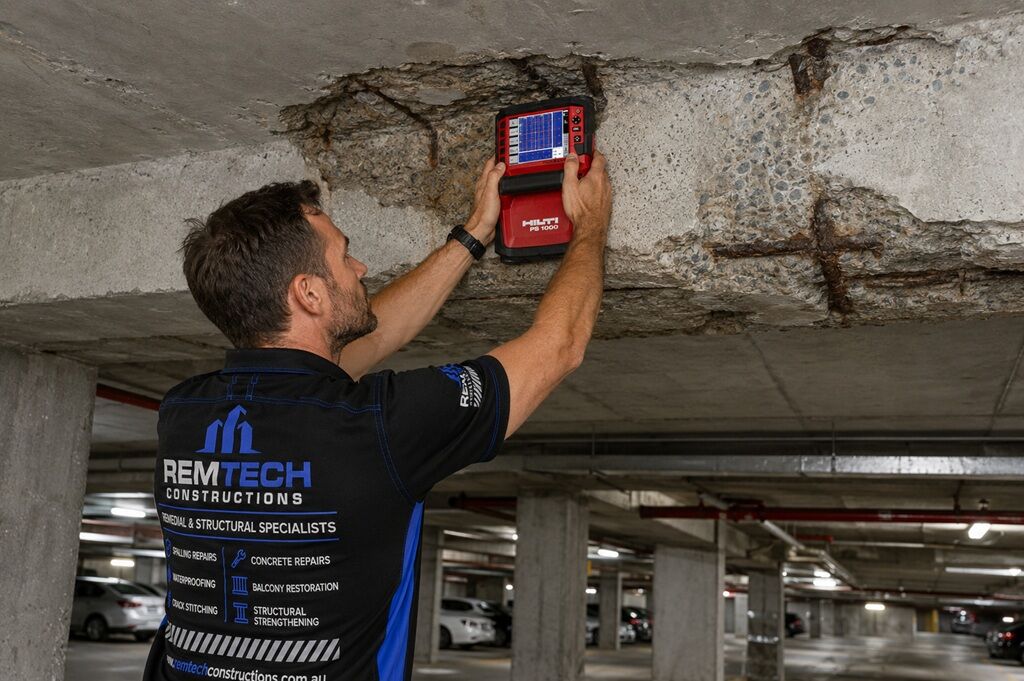
Strata Balcony Slab-Edge Concrete Cancer Repairs
Location: Sydney, NSW
Property Type: Strata Apartment Building
Repair Areas: Balcony Fronts, Slab Edges And Soffits
Service: External Concrete Cancer Repairs
Completion Date: 26 January 2026
The Problem
Multiple balcony slab edges displayed horizontal cracking, rust staining and sections of spalling concrete around the embedded reinforcement. The deterioration affected exposed external concrete and required more than a cosmetic surface patch, with loose material needing to be removed so the concealed condition of the reinforcement and surrounding concrete could be properly assessed.
The Repair Scope
Each repair area was defined before unsound and delaminated concrete was removed from the balcony fronts, slab edges and soffit returns. The corrosion-affected reinforcement was sufficiently exposed, mechanically cleaned and treated, with steel replacement or supplementation completed where required by the approved repair scope. Compatible repair mortar was then applied in controlled stages to rebuild the damaged areas, restore the original balcony profiles and prepare the completed surfaces for the specified façade coating, waterproofing and sealant reinstatement.
The Result
The deteriorated balcony edges were reconstructed with the required concrete cover, consistent profiles and a clean external finish. The completed work addressed the damaged concrete and affected reinforcement while preparing the repaired balcony areas for long-term protective finishing.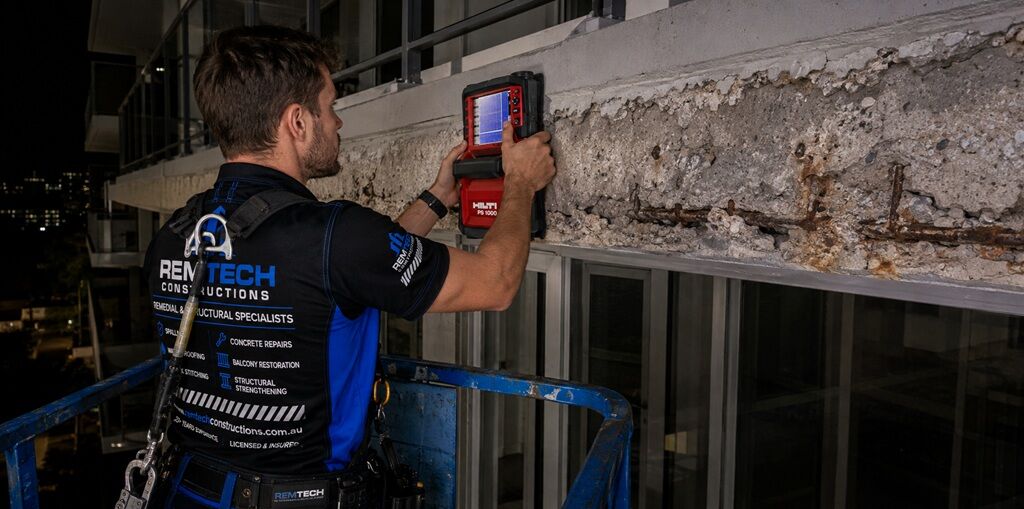
Areas We Service
We provide professional concrete cancer repair services across:
– Sydney
– St George
– Newcastle
– Inner West
– Wollongong
– Sydney CBD
– The Hills Shire
– Eastern Suburbs
– Sutherland Shire
– Northern Sydney
– Northern Beaches
– Lower North Shore
– Upper North Shore
– North West & Ryde
– South West Sydney
– Greater Western Sydney
Regional concrete repair projects in Newcastle and Wollongong may also be considered depending on the project scope, access and availability.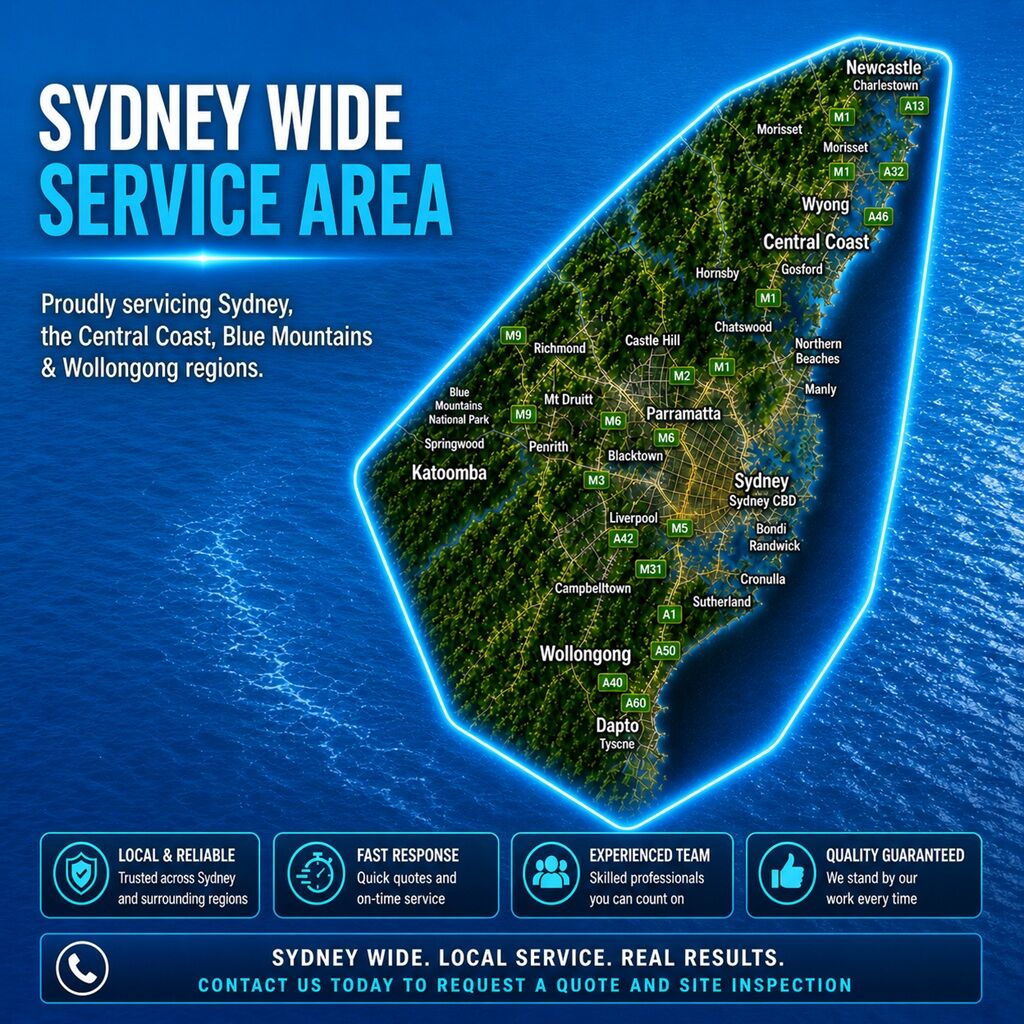
Strata, Balcony, Car Park And Structural Concrete Repairs
Concrete cancer is common in Sydney strata buildings, especially where balconies, car parks, slab edges, soffits, staircases and common property areas have been exposed to moisture for long periods.
Remtech Constructions works with strata managers, owners corporations, property managers, builders and building owners to inspect and repair concrete cancer in residential, commercial and strata properties.
Common repair areas include balcony slab edges, car park columns, suspended slabs, beams, soffits, staircases, landings, podium decks and external walkways.
For structural areas such as columns, beams and suspended slabs, the repair scope may need to be coordinated with an engineer, consultant or project specification.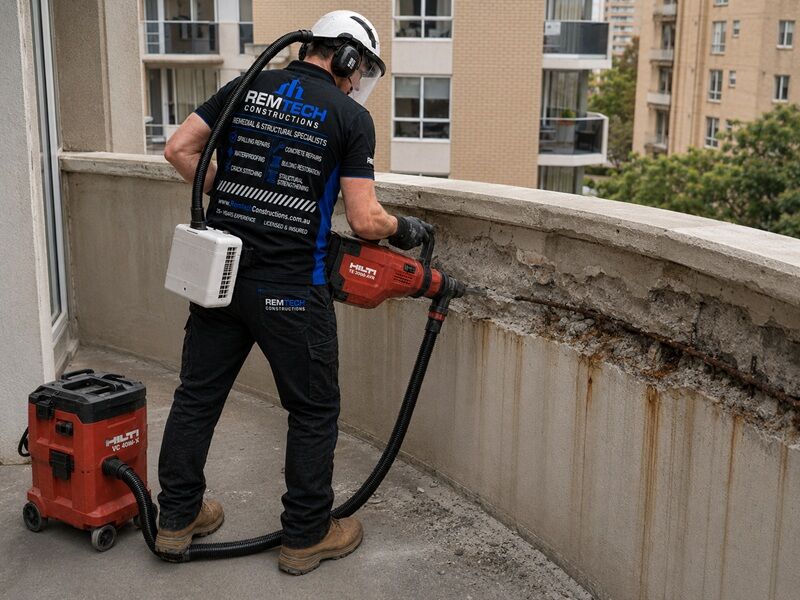
Quality-Controlled Concrete Repair Preparation
Durable concrete cancer repairs depend on correct preparation of the affected concrete and reinforcement before the repair material is installed.
Depending on the approved repair scope, the work may include:
– Defining the repair perimeter
– Removing loose, delaminated and unsound concrete
– Exposing affected reinforcement sufficiently for preparation
– Removing corrosion and assessing steel condition
– Treating or supplementing reinforcement where specified
– Preparing the remaining concrete substrate
– Applying compatible primers and repair mortars
– Reinstating the required concrete profile and cover
– Correctly curing and protecting the repair
– Addressing water ingress or failed waterproofing where included
Repair work is completed in accordance with the agreed project scope, relevant consultant or engineering requirements, product-manufacturer instructions and applicable Australian Standards.
Dust extraction and other dust-control methods are used where suitable for the task and site conditions.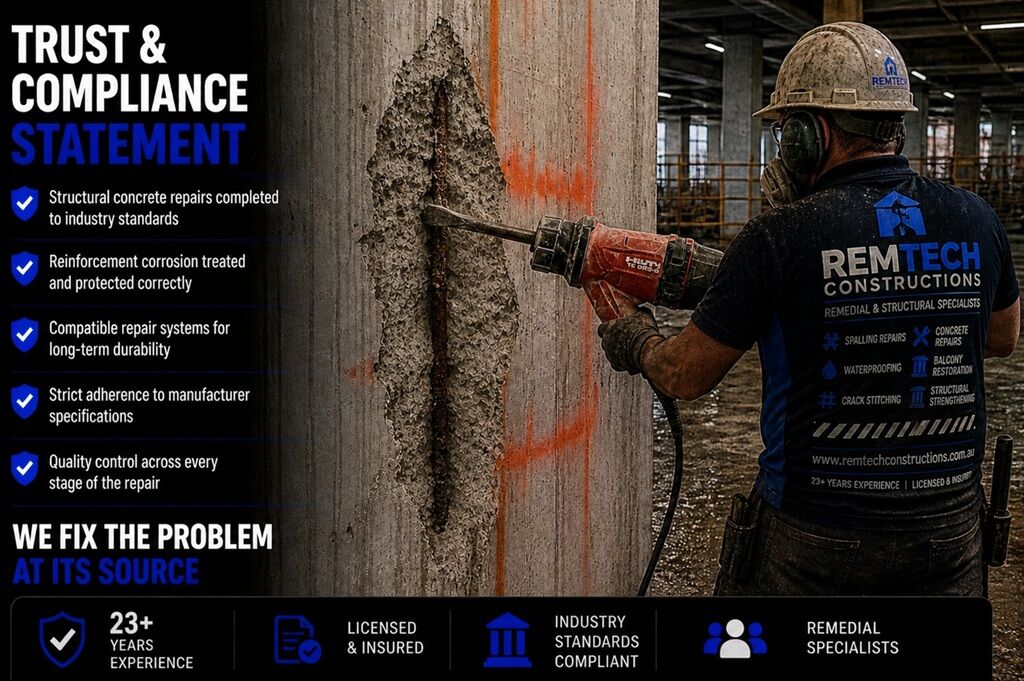
Book A Concrete Cancer Inspection In Sydney
Arrange an inspection if you have noticed cracking, rust staining, hollow concrete, exposed reinforcement, concrete spalling or loose concrete around a balcony, slab, car park, column, beam or other reinforced concrete element.
Remtech Constructions can inspect the affected area, discuss the likely causes and prepare a documented repair scope and quotation based on the site conditions.
Contact Our Team to arrange an on-site Concrete Cancer Inspection In Sydney.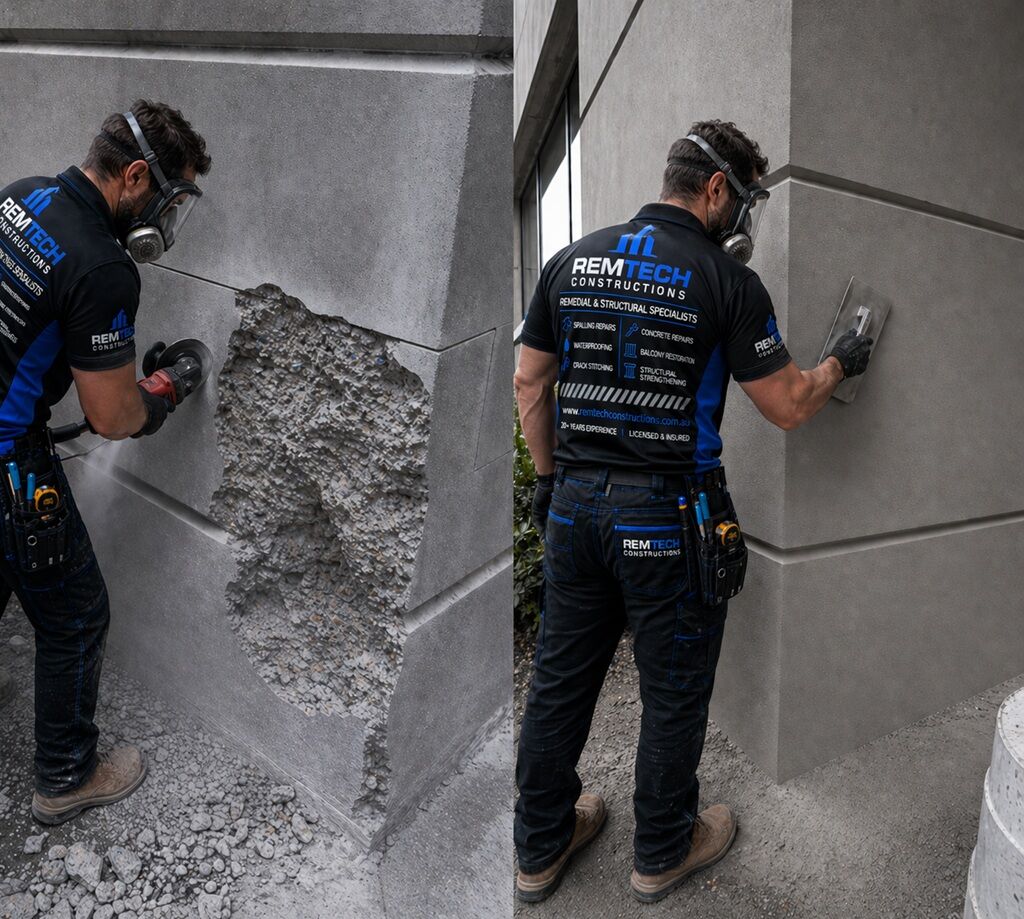
Our Concrete Cancer Repair FAQs
Below are answers to common questions about concrete cancer inspections, repair scopes and remedial concrete work.
DO YOU NEED HELP WITH A SERVICE?
Fill out the form and our team will contact you!
REAL BEFORE & AFTER REPAIR RESULTS
Remtech Constructions delivers coordinated concrete repairs that restore strength, safety and appearance by addressing deterioration at its source and reinstating damaged concrete with proven systems.
BEFORE DAMAGE
Identify spalling, corrosion and structural deterioration.
REPAIR PROCESS
Engineered remediation using proven techniques and materials.
AFTER REINSTATEMENT
Surface reinstatement for structural integrity and durability.


FREE QUOTE CALL OR TEXT
0400 176 537
Licensed, Insured Remedial Building Specialists You Can Trust!*
GET YOUR JOB BOOKED IN TODAY !!