

FREE QUOTE CALL OR TEXT
0400 176 537
Licensed, Insured Remedial Building Specialists You Can Trust!*
GET YOUR JOB BOOKED IN TODAY !!
Brick Cavity Flashing Repairs Sydney
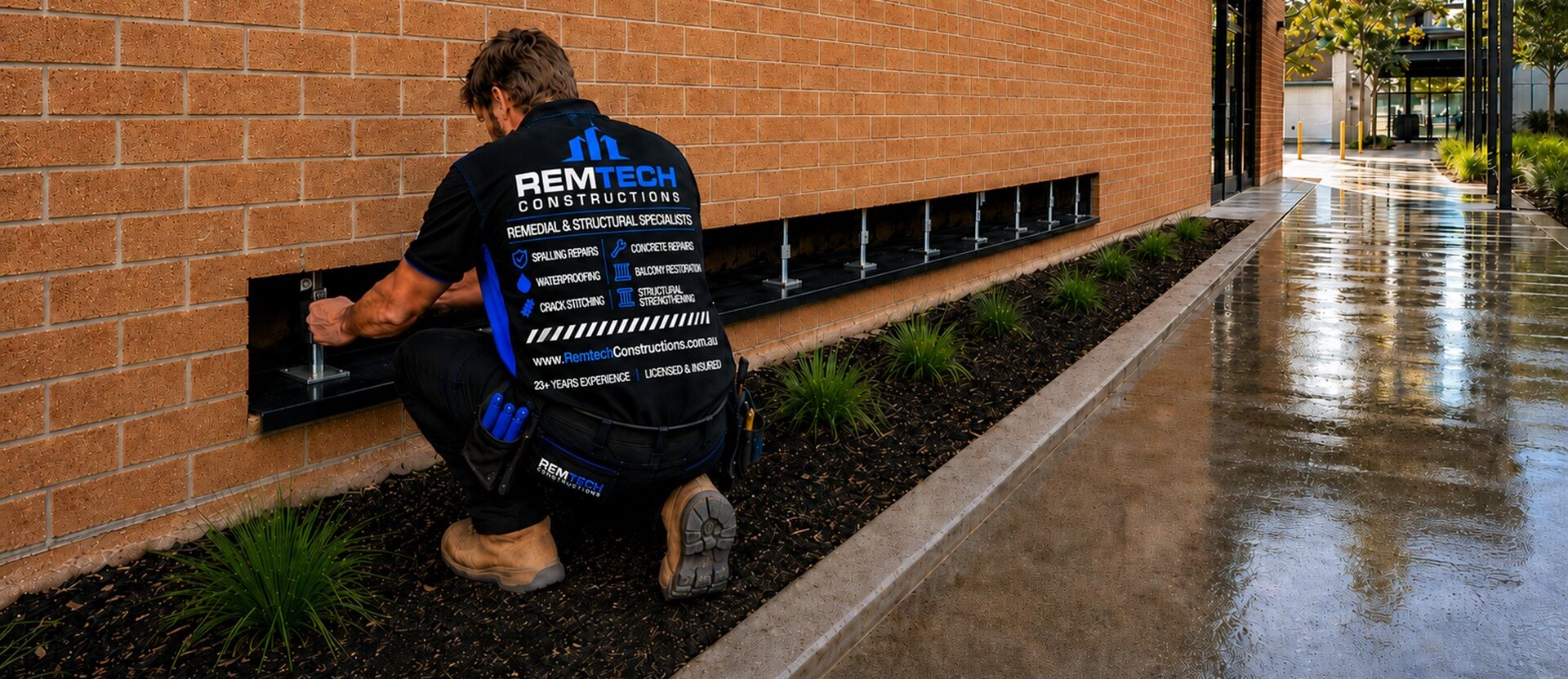
Brick cavity flashing plays a critical role in protecting buildings from concealed moisture ingress and long-term structural deterioration. When flashing systems fail, water can travel through masonry cavities and begin damaging structural components from the inside out.
At Remtech Constructions, we specialise in brick cavity flashing inspections, cavity flashing remediation, façade moisture investigations, and remedial construction services across residential, commercial, industrial, and strata buildings throughout Sydney.
Our team provides technically correct remedial solutions designed to restore proper cavity drainage, protect structural elements, and resolve ongoing façade moisture ingress issues affecting masonry wall systems.
Failed brick cavity flashing systems can contribute to significant hidden structural deterioration including moisture ingress, steel corrosion, façade cracking, and long-term building envelope damage. Early investigation and remediation is critical to preventing larger structural and façade repair issues later.
REQUEST QUOTE CALL OR TEXT 0400 176 537
Trusted by Builders, Strata Managers & Property Owners
GET YOUR JOB BOOKED IN TODAY !!

PROFESSIONAL BRICK CAVITY FLASHING REPAIRS
• Highest Quality Materials
• Professional Site Inspection
• Long Warranties On All Repairs
Expert Brick Cavity Flashing Service In Sydney
Expert Brick Cavity Flashing Service In Sydney
What Is Brick Cavity Flashing?
Brick cavity flashing is a concealed waterproofing and drainage barrier installed inside masonry wall cavities to collect and redirect moisture safely back to the exterior of a building.
Brick walls are not completely waterproof. During rain and weather exposure, moisture naturally penetrates the outer masonry layer and enters the wall cavity behind the façade. Cavity flashing is designed to intercept this moisture and direct it toward drainage points such as weep holes before it reaches internal structural components.
Brick cavity flashing is commonly installed:
– Above windows
– Above doors
– Around balconies
– At slab edges
– Beneath parapets
– Around structural openings
– At roof junctions
– Around façade penetrations
A properly functioning cavity flashing system helps:
– Prevent internal water ingress
– Protect steel lintels from corrosion
– Reduce façade deterioration
– Improve cavity drainage
– Minimise moisture-related structural damage
– Protect internal wall systems
Without correctly functioning flashing systems, water can become trapped inside the wall assembly and progressively damage concealed structural elements over time.
What Causes Brick Cavity Flashing Failure?
Brick cavity flashing systems can fail for many different reasons, particularly in ageing buildings or poorly designed wall systems.
Common causes of cavity flashing failure include:
– Ageing or deteriorated membranes
– Poor original installation
– Missing cavity trays
– Blocked weep holes
– Inadequate cavity drainage
– Incorrect flashing laps or terminations
– Façade movement and cracking
– Corrosion-related deterioration
– Non-compliant construction methods
– Poorly integrated waterproofing systems
– UV deterioration of exposed materials
– Structural movement around openings
In many cases, multiple defects contribute to the overall failure of the cavity drainage system.
Once flashing begins failing, moisture can remain trapped inside the cavity and progressively spread throughout the surrounding structure.
Common Signs Of Failed Brick Cavity Flashing
Many cavity flashing failures remain hidden until significant structural or moisture-related damage has already occurred.
Common warning signs include:
– leaking around windows or doors
– damp internal walls
– bubbling paint or plaster damage
– rust staining bleeding through brickwork
– cracked or displaced masonry
– deteriorated mortar joints
– mould or persistent moisture smells
– concrete spalling near openings
– corroded steel lintels
– recurring façade leaks
– internal moisture ingress after heavy rain
– staining beneath slab edges or balconies
In many situations, the visible leak is only a symptom of a much larger concealed cavity drainage issue.
Problems Caused By Failed Brick Cavity Flashing
Failed cavity flashing systems can create extensive hidden structural deterioration if moisture is allowed to remain trapped within the building envelope.
Common problems associated with failed brick cavity flashing include:
– steel lintel corrosion
– concrete cancer
– façade cracking
– masonry displacement
– internal water ingress
– corrosion expansion
– structural moisture damage
– rust bleed-through
– spalling concrete
– mould growth
– deterioration of internal finishes
– weakening of structural supports
If left unresolved, long-term cavity moisture issues can eventually require extensive remedial construction and façade restoration works.
Types Of Brick Cavity Flashing Systems
Different types of brick cavity flashing systems are used depending on the building design, façade configuration, and moisture management requirements.
Common flashing systems include:
– cavity tray flashing
– through-wall flashing
– window head flashing
– door head flashing
– parapet flashing
– balcony cavity flashing
– slab edge flashing
– retrofit cavity flashing systems
– stainless steel flashing systems
– flexible membrane flashing systems
– bituminous flashing systems
– damp-proof course integrated flashing
Each flashing system must be correctly integrated into the overall cavity drainage design to ensure moisture is safely redirected away from structural elements.
Brick Cavity Flashing Around Windows And Doors
One of the most common failure areas is above windows and doors where cavity flashing protects structural lintels and redirects moisture away from internal wall systems.
When flashing systems fail around structural openings, moisture can begin accumulating directly above steel lintels and concealed support systems, eventually causing:
– corrosion expansion
– cracking masonry
– rust staining
– displaced brickwork
– concrete spalling
– façade movement
– internal leaking
– structural deterioration
– Correct remediation often requires:
– carefully removing sections of masonry
– exposing the cavity system
– identifying concealed moisture pathways
– removing failed flashing materials
– installing new cavity flashing
– improving cavity drainage
– treating corrosion-related deterioration
– reinstating brickwork
All works must be carried out carefully to maintain structural integrity, moisture performance, and façade appearance.
Our Brick Cavity Flashing Inspection Process
At Remtech Constructions, we follow a systematic remedial construction approach designed to identify the true source of façade moisture ingress rather than simply treating visible symptoms.
Our inspection process may include:
1) Façade and masonry inspection
2) Moisture ingress investigation
3) Cavity drainage assessment
4) Inspection around windows and structural openings
5) Flashing condition assessment
6) Leak tracing investigations
7) Corrosion-related deterioration assessment
8) Identification of failed waterproofing interfaces
9) Remediation recommendations
10) Repair scope development
Every building presents different moisture management challenges, which is why proper investigation is critical before remediation works begin.
Our Brick Cavity Flashing Repair Services
We provide complete brick cavity flashing remediation and façade moisture management solutions including:
– cavity flashing inspections
– cavity flashing replacement
– cavity tray installation
– façade leak investigations
– remedial waterproofing integration
– masonry remediation
– weep hole installation and correction
– brickwork removal and reinstatement
– lintel exposure and corrosion treatment
– façade moisture ingress remediation
– structural moisture investigations
– remedial façade repairs
All works are carried out using technically correct remedial construction methodologies designed for long-term durability and performance.
Buildings We Commonly Repair
We provide brick cavity flashing inspections and remediation services across a wide range of building types throughout Sydney.
Common building types include:
– residential homes
– apartment buildings
– strata complexes
– commercial buildings
– industrial facilities
– heritage properties
– mixed-use developments
– podium structures
– basement structures
– retaining wall systems
– schools
– hospitals
– aged care facilities
Our team understands the different moisture management and façade remediation requirements associated with each building type.
Why Proper Brick Cavity Flashing Installation Matters
Properly installed brick cavity flashing is essential for protecting buildings from hidden moisture-related deterioration.
When flashing systems are poorly installed, incorrectly integrated, or allowed to deteriorate over time, moisture can remain trapped inside the wall cavity and progressively damage structural components.
Correct cavity flashing installation helps:
– prevent long-term water ingress
– protect structural lintels
– reduce corrosion risk
– improve façade drainage
– minimise internal moisture damage
– reduce future remedial repair costs
– improve building durability
– maintain façade performance
Small concealed flashing defects can eventually develop into major structural remediation issues if left unresolved.
Why Proper Cavity Drainage Matters
Brickwork naturally absorbs moisture during rain and weather exposure. A properly functioning cavity drainage system is designed to safely redirect this moisture back to the exterior before it reaches structural components.
Brick cavity flashing works together with:
– weep holes
– cavity trays
– waterproofing membranes
– damp-proof courses
– expansion joints
– façade drainage systems
– sealant systems
If any part of the cavity drainage system fails, water can become trapped inside the building envelope and progressively damage concealed structural elements over time.
Brick Cavity Flashing Results – Before & After
Our brick cavity flashing before and after projects highlight the difference that properly designed cavity drainage and remedial flashing systems can make to a building’s long-term performance.
Before remediation, many buildings experience leaking, rust staining, cracked brickwork, damp internal walls, and ongoing moisture ingress caused by failed cavity flashing systems. After remediation, the cavity drainage system is restored, moisture is redirected correctly, and the surrounding masonry and structural elements are protected from further deterioration.
At Remtech Constructions, we provide professional brick cavity flashing remediation services across Sydney using technically correct remedial construction methodologies designed for long-term structural protection.
Areas We Service
We provide professional brick cavity flashing services across:
– Sydney
– St George
– Newcastle
– Inner West
– Wollongong
– Sydney CBD
– The Hills Shire
– Eastern Suburbs
– Sutherland Shire
– Northern Sydney
– Northern Beaches
– Lower North Shore
– Upper North Shore
– North West & Ryde
– South West Sydney
– Greater Western Sydney

Quality, Compliance & Brick Cavity Flashing Standards
All brick cavity flashing remediation and waterproofing preparation works are carried out using industry-approved installation methods and moisture-management systems aligned with Australian building standards and manufacturer specifications.
Our repair methods are designed to ensure proper water diversion, cavity drainage performance, and long-term façade protection for residential, commercial, and strata buildings.
This ensures:
– Correct cavity flashing installation
– Proper moisture control and water diversion
– Compliance with industry standards and manufacturer systems
– Long-term durability and weather resistance
– Reduced risk of water ingress and façade deterioration
All projects are completed using professional remedial construction methods, quality-controlled installation procedures, and preparation systems designed to deliver consistent, high-performance waterproofing outcomes.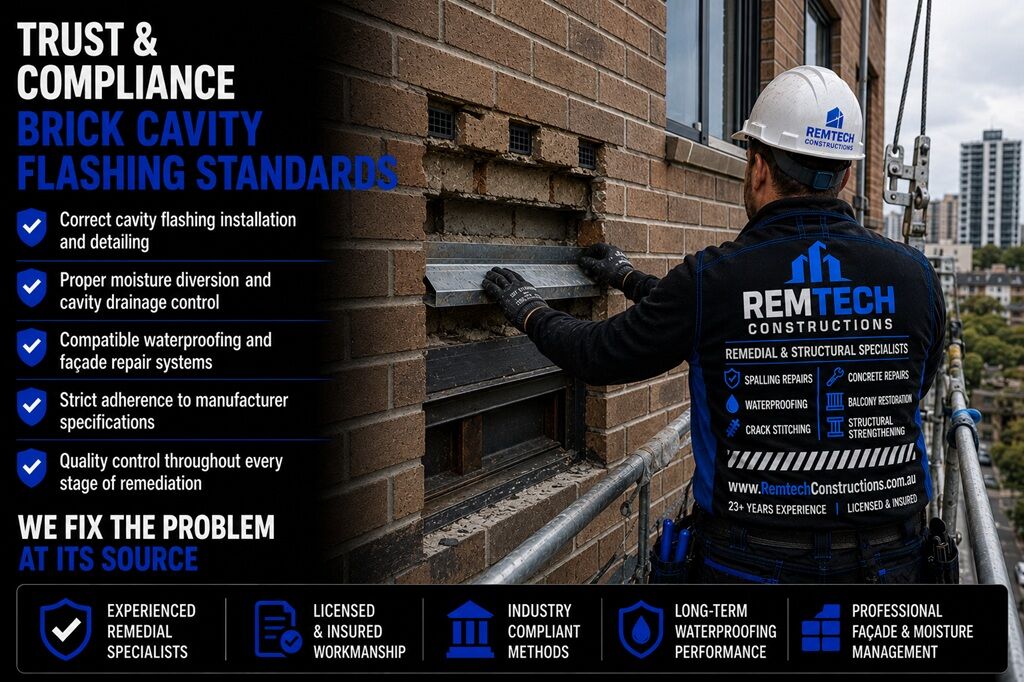
Book A Brick Cavity Flashing Inspection In Sydney
If you’ve noticed signs of water ingress, leaking walls, damp internal areas, cracked mortar joints, or staining around windows and brickwork, it’s important to address the issue before further moisture damage develops.
Contact Remtech Constructions today to arrange a professional Brick Cavity Flashing Inspection in Sydney. Our team will assess the condition of the façade, identify potential moisture entry points, and provide a transparent repair recommendation tailored to your building.
We provide clear reporting and practical remediation solutions designed to improve waterproofing performance, manage cavity drainage correctly, and protect the long-term durability of your structure.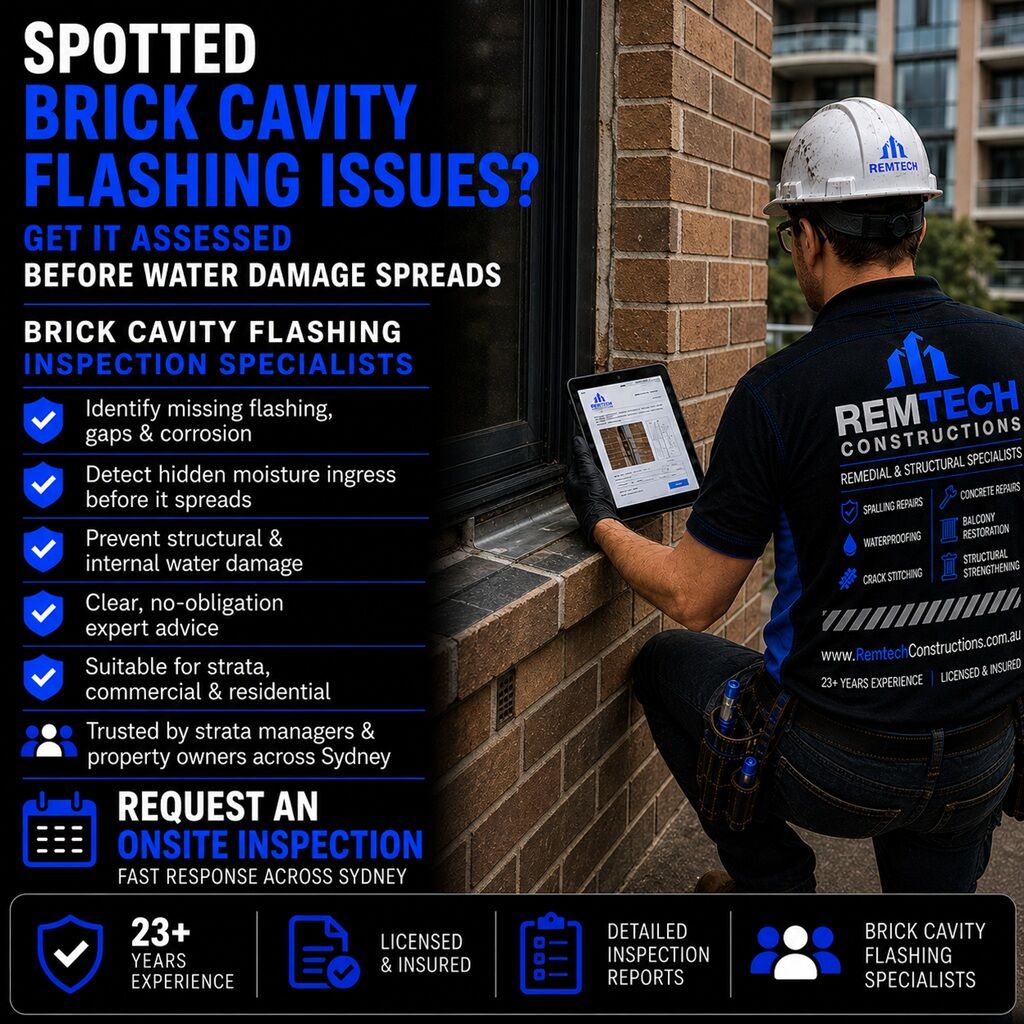
DO YOU NEED HELP WITH A SERVICE?
Fill out the form and our team will contact you!


FREE QUOTE CALL OR TEXT
0400 176 537
Licensed, Insured Remedial Building Specialists You Can Trust!*
GET YOUR JOB BOOKED IN TODAY !!