
FREE QUOTE CALL OR TEXT
0400 176 537
Licensed, Insured Remedial Building Specialists You Can Trust!*
GET YOUR JOB BOOKED IN TODAY !!
10 Possible Signs Of Concrete Cancer
Concrete Cancer is one of the most common structural concrete problems found throughout residential, commercial, industrial, and strata buildings across Sydney. It occurs when moisture penetrates concrete and causes the internal steel reinforcement to rust and expand. As the steel expands, pressure builds inside the concrete, leading to cracking, spalling, delamination, and structural deterioration.
Early detection is critical. Identifying the warning signs of concrete cancer early can help prevent major structural damage, costly repairs, safety risks, and ongoing water ingress issues. Below are 10 common signs that may indicate concrete cancer is present.
1) Rust
Rust marks appearing on concrete surfaces are one of the most common early signs of concrete cancer. These brown or orange stains usually indicate moisture has reached the internal steel reinforcement, causing the steel to corrode and bleed through the concrete surface.
Rust staining often appears around cracks, balcony edges, columns, soffits, slabs, and structural beams where water penetration is present.
2) Worn Surfaces
Worn, weathered, or porous concrete surfaces allow moisture to penetrate more easily into the structure. Over time, this water penetration can reach the embedded steel reinforcement and begin the concrete cancer process.
Unprotected concrete is particularly vulnerable in coastal areas, car parks, balconies, rooftops, and areas exposed to constant moisture.
3) Cracked / Fractured Concrete
Concrete cracking is a major warning sign of potential concrete cancer. Cracks allow water, oxygen, and salts to reach the steel reinforcement inside the concrete.
As the steel rusts and expands, additional pressure causes further concrete fracturing and delamination, allowing even more moisture to enter the structure and accelerate deterioration.
4) Moisture Stains And Ponding
Water ponding on concrete surfaces or visible moisture stains often indicate poor drainage or waterproofing failure. Standing water significantly increases the risk of concrete cancer by allowing moisture to continuously penetrate the concrete structure.
This is commonly found on balconies, rooftops, car parks, podium slabs, and external walkways throughout Sydney buildings.
5) Failing Control And Expansion Joints
Concrete expansion joints and control joints are designed to allow natural structural movement. When these joints fail, crack, separate, or lose flexibility, water can enter the concrete structure and cause steel reinforcement corrosion.
Damaged joints can also lead to structural movement and additional concrete cracking over time.
6) Inadequate Concrete Cover
Concrete cover refers to the thickness of concrete protecting the internal steel reinforcement. If the reinforcement is positioned too close to the surface, moisture can reach the steel much faster.
Insufficient concrete cover greatly increases the risk of corrosion and premature concrete cancer deterioration.
7) Rusted Balustrade Fixings
Rusted balustrade posts, railings, and fixings are a common cause of localised concrete cancer around balconies and external slabs. As the metal components corrode, rust expansion spreads into the surrounding concrete.
This often causes concrete cracking, delamination, spalling, and structural weakening around the fixing locations.
8) Bubbling Paint
Paint bubbling, peeling, or delaminating on concrete surfaces often indicates trapped moisture beneath the surface. In many cases, this moisture is caused by active concrete cancer within the structure.
This is frequently seen on concrete soffits, ceilings, columns, car parks, and balconies.
9) Hollow Surfaces
Concrete that sounds hollow when tapped often indicates delamination beneath the surface. This occurs when rusting steel reinforcement expands and separates the concrete internally.
Hollow concrete is a serious warning sign that structural deterioration may already be advanced and requires professional inspection.
10) Exposed Steel Reinforcement
Exposed steel reinforcement is one of the most severe signs of concrete cancer. This occurs when concrete has broken away due to internal steel expansion and corrosion.
Once steel reinforcement is exposed to the environment, corrosion accelerates rapidly and structural integrity can continue to deteriorate if repairs are not carried out promptly.
Book A Concrete Cancer Inspection In Sydney
If you have noticed Cracking Concrete, rust stains, exposed steel reinforcement, bubbling render, loose concrete, or visible spalling, it is important to arrange a professional concrete cancer inspection as early as possible. Concrete cancer can continue to spread when moisture and oxygen reach the steel reinforcement inside the slab, wall, column, beam, balcony, car park, stairwell, or suspended concrete structure.
Remtech Constructions provides professional concrete cancer inspections, structural concrete repairs, spalling concrete repairs, surface preparation, remedial repairs, and long-term repair solutions throughout Sydney. Our team can inspect the affected area, identify the likely cause of the deterioration, assess the condition of the surrounding concrete, and recommend the most suitable repair method before the damage becomes more expensive to fix.
For more detailed information about our repair process, visit our Concrete Cancer Repairs Sydney service page. We provide concrete breakout, steel reinforcement cleaning, rust treatment, corrosion protection, repair mortar application, patch repairs, surface preparation, and protective coating options depending on the condition of the structure.
Concrete cancer should not be ignored, especially when it appears on balconies, unit blocks, basement car parks, commercial buildings, strata properties, retaining walls, concrete columns, beams, soffits, and exposed slab edges. Early inspection can help reduce further structural deterioration, prevent larger sections from breaking away, and help property owners plan the correct remedial repair approach.
If your property has signs of spalling, cracking, rust staining, drummy concrete, delaminated concrete, or exposed reinforcement, Remtech Constructions can provide a practical assessment and quote for Professional Concrete Cancer Repair Services across Sydney.
We work with residential, commercial, industrial, strata, and remedial building projects, including concrete cancer repairs in apartment buildings, car parks, balconies, warehouses, factories, schools, retail centres, and ageing concrete structures. Whether the issue is minor surface spalling or more advanced reinforcement corrosion, our team can help determine the correct repair scope and prepare the area properly before reinstatement.
Book a Concrete Cancer Inspections today to stop the issue from spreading and get clear advice from a Sydney remedial repair team. For full service details, repair options, and common concrete cancer warning signs, view our Concrete Spalling and Concrete Cancer Repairs page.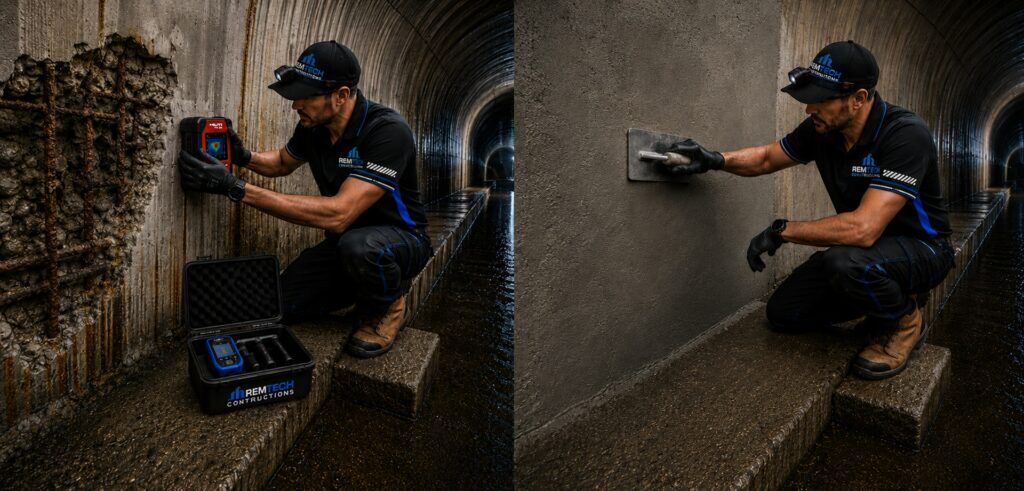
FREE QUOTE CALL OR TEXT
0400 176 537
Licensed, Insured Remedial Building Specialists You Can Trust!*
GET YOUR JOB BOOKED IN TODAY !!